See how semiconductor companies can increase yield with the help of Arena PLM and QMS.
Semiconductor wafers contain hundreds or even thousands of individual dies. If defects occur during manufacturing, some of those dies may fail testing and become unusable.
Effective yield management helps organizations:
Yield performance is often monitored throughout fabrication, wafer sort, assembly, and final testing.
Many variables can influence yield throughout the manufacturing process.
Common factors include:
Understanding these factors helps engineering and quality teams identify opportunities for improvement.
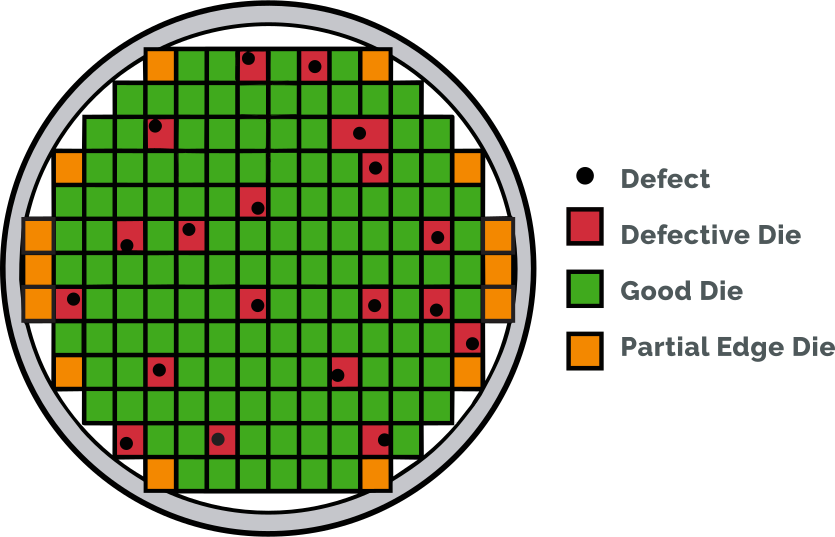
Manufacturers collect and analyze data throughout production to identify trends, monitor process performance, and investigate defects.
Yield management activities often include:
The goal is to increase the percentage of functional devices while reducing manufacturing variability.
QMS platforms play an important role in yield improvement efforts by supporting corrective actions, nonconformance management, audit activities, and quality investigations. When yield issues occur, QMS workflows help ensure problems are documented, analyzed, and resolved.
PLM systems maintain traceability between product designs, engineering changes, manufacturing records, and quality events. Organizations can connect yield trends to specific revisions, process modifications, or supplier changes. Together, PLM and QMS provide the visibility needed to support continuous improvement and long-term yield optimization.
Semiconductor yield refers to the percentage of manufactured chips that meet required performance and quality standards. Higher yields result in more usable devices from each wafer.
Yield loss can result from process variation, contamination, equipment issues, material defects, design challenges, or packaging problems. Identifying the root cause is critical for improvement.
PLM provides traceability between design and manufacturing data, while QMS supports defect investigations and corrective actions. Together they help organizations identify and resolve yield-related issues more effectively.

Arena PLM software streamlines product development so you can deliver products under budget and ahead of schedule.

Arena QMS helps you ensure regulatory compliance and faster delivery of life-enhancing products to your customers.