What are Early-Stage Companies?

Early-Stage Companies Definition

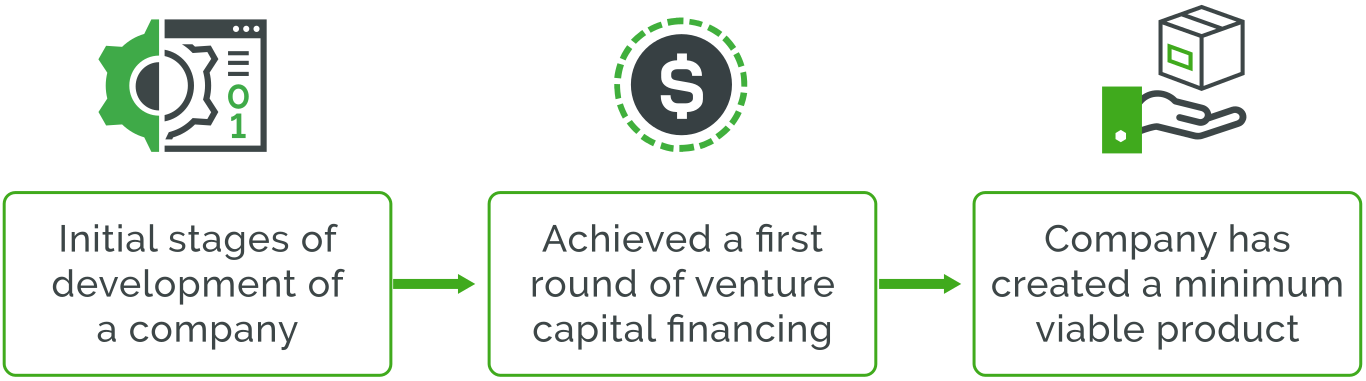
Early-stage companies are businesses in the initial phases of development, typically focused on transforming an idea or prototype into a commercially viable product or service. At this stage, companies are validating their market opportunity, refining their products, acquiring customers, building operational processes, and securing funding to support growth. While definitions vary, early-stage companies generally include pre-seed, seed, and Series A startups.

How Do Early-Stage Companies Manage Growth and Complexity?

Most early-stage companies operate with small teams and limited resources, making speed, flexibility, and efficient decision-making essential. Founders often manage multiple responsibilities, including product development, fundraising, customer acquisition, hiring, and business strategy. As the company grows, processes that were once informal often need to become more structured to support increasing product complexity and organizational scale.

What Challenges Do Growing Product Companies Face?

For companies developing physical products, growth introduces additional challenges. Engineering teams must manage design revisions, bills of materials (BOMs), supplier relationships, manufacturing documentation, and regulatory requirements while continuing to innovate. At the same time, leadership must balance product quality, production costs, and speed to market.

Why Are Scalable Business Processes Important for Growing Companies?

Building scalable business processes early helps reduce operational risk as the company expands. Organized product information, controlled engineering changes, and consistent documentation managed in a central system improves collaboration across engineering, manufacturing, quality, and supply chain teams. Establishing these practices during the early stages allows companies to grow more efficiently, reduce costly mistakes, and prepare for future investment, regulatory requirements, and commercial manufacturing.

What is Early Stage Companies

How Do PLM and QMS Help Early-Stage Companies Scale?

As early-stage companies move from prototype to production, managing product and quality information becomes increasingly important. Product lifecycle management (PLM) systems provide a centralized location for managing product information including bills of materials, engineering changes, design files, documentation, requirements, and supplier information. This helps growing teams maintain accurate product records while supporting collaboration across departments and external partners.

How Does QMS Support Business Growth and Compliance?

Quality management system (QMS) processes become increasingly valuable as production volumes grow and regulatory expectations increase. Document control, change management, corrective and preventive actions (CAPAs), nonconformance management, supplier quality, and audit readiness help companies create repeatable processes that support long-term growth.

Why Should Early-Stage Companies Connect PLM and QMS?

By connecting PLM and QMS, early-stage companies create a single source of truth for product and quality information. This improves visibility, reduces manual work, strengthens traceability, and helps manufacturers build scalable processes that support faster product development, smoother production launches, and continued business growth.

Frequently Asked Questions

What is considered an early-stage company?

An early-stage company is a business that is developing its product, validating its market, building customers, and establishing operations before reaching large-scale growth or maturity.

What challenges do early-stage manufacturing companies face?

Common challenges include managing product changes, organizing engineering data, controlling costs, coordinating suppliers, preparing for manufacturing, and maintaining product quality with limited resources.

Why are structured product development processes important for startups?

Structured processes reduce errors, improve collaboration, support faster decision-making, and create a strong foundation for scaling operations as the business grows.

How do PLM and QMS benefit early-stage companies?

PLM and QMS solutions help startups better manage BOMs and engineering changes, strengthen quality processes, improve traceability, support supplier collaboration, establish controlled processes, and prepare for manufacturing and regulatory requirements.


Arena PLM and QMS Knowledge Hub

Product Development, Quality & Compliance

Cloud PLM & QMS Solution Capabilities & Benefits

Engineering, Manufacturing & Supplier Collaboration

Automation, Collaboration, and Control

PLM and QMS Improve Data Integrity, Traceability & Compliance

Data Integrity, Traceability, and Security

What is a Manufacturer

Common Questions About Arena PLM and QMS Solutions

Icon-PLM

Product Lifecycle Management

Arena PLM software streamlines product development so you can deliver products under budget and ahead of schedule.

Icon-QMS

Quality Management System

Arena QMS helps you ensure regulatory compliance and faster delivery of life-enhancing products to your customers.