What is Cost of Goods Sold (COGS)?

Cost of Goods Sold (COGS) Definition

Cost of Goods Sold (COGS) is the total direct cost of producing or purchasing the products a company sells during a specific accounting period. COGS typically includes expenses directly related to manufacturing or acquiring a product, such as raw materials, components, direct labor, and certain manufacturing overhead costs. It does not include indirect business expenses like marketing, sales, administrative salaries, or research and development.

How Does COGS Impact Profitability and Pricing?

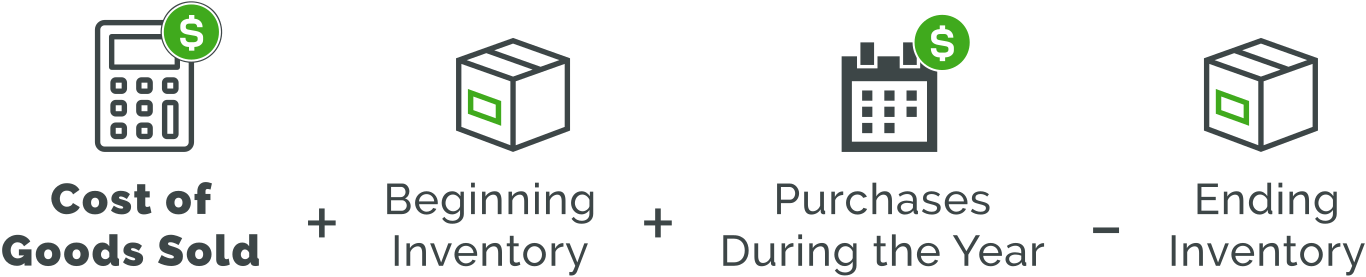
COGS is a key financial metric because it directly affects gross profit and overall profitability. It is calculated by adding beginning inventory to purchases or production costs during the period and then subtracting ending inventory. Businesses use this figure to understand how much it costs to produce each product and to evaluate pricing strategies, operational efficiency, and profit margins.

Why Is Controlling COGS Important for Manufacturers?

For startups and growing manufacturers, controlling COGS is critical to long-term success. Rising material costs, supplier price increases, manufacturing inefficiencies, excess scrap, rework, and engineering changes can all increase production costs. Monitoring COGS helps organizations identify opportunities to improve sourcing, optimize manufacturing processes, reduce waste, and negotiate better supplier agreements.

How Does Product Data Accuracy Help Control COGS?

As companies scale production, maintaining accurate product records becomes increasingly important. Small errors in bills of materials (BOMs), inventory records, or manufacturing instructions can significantly impact production costs and profitability. By understanding what contributes to COGS, companies can make more informed decisions about product design, sourcing strategies, pricing, and production planning while supporting sustainable business growth.

What Is Cost of Goods Sold (COGS)

How Do PLM and QMS Help Reduce Cost of Goods Sold?

Product lifecycle management (PLM) and quality management system (QMS) solutions help manufacturers manage many of the processes that influence production costs. A PLM system maintains accurate product structures, BOMs, approved manufacturer lists, engineering changes, and supplier information in a centralized environment, helping teams reduce costly errors before products reach production.

Why Are Connected Product and Quality Records Important for Controlling Manufacturing Costs?

Disconnected engineering and quality information often leads to outdated documentation, incorrect components, production delays, scrap, and rework, all of which increase COGS. Connecting PLM and QMS processes in a unified system creates better visibility across engineering, quality, manufacturing, and supply chain teams, allowing organizations to identify potential issues earlier in the product lifecycle.

Connected processes such as corrective and preventive actions (CAPAs), nonconformance management, supplier quality, document control, and change management help reduce defects and improve consistency. By improving collaboration and maintaining a single source of truth, manufacturers can better control production costs while supporting product quality, regulatory compliance, and operational efficiency.

Frequently Asked Questions

What does the Cost of Goods Sold (COGS) include?

COGS includes the direct costs of producing or purchasing products sold during an accounting period, such as materials, direct labor, components, and certain manufacturing overhead expenses.

Why is COGS important for manufacturers?

COGS helps manufacturers measure production costs, calculate gross profit, evaluate pricing strategies, and identify cost-saving opportunities.

What factors can increase the Cost of Goods Sold?

Common factors that can increase the cost of goods sold include higher material prices, supplier cost increases, production inefficiencies, scrap, rework, inventory inaccuracies, engineering changes, and quality issues.

How do PLM and QMS help lower COGS?

A unified PLM and QMS solution can help improve product data accuracy, streamline engineering changes, strengthen quality processes, reduce manufacturing errors, improve supplier collaboration, and help minimize scrap and rework, all of which can contribute to lower production costs.

Arena PLM and QMS Knowledge Hub

Product Development, Quality & Compliance

Cloud PLM & QMS Solution Capabilities & Benefits

Engineering, Manufacturing & Supplier Collaboration

Automation, Collaboration, and Control

PLM and QMS Improve Data Integrity, Traceability & Compliance

Data Integrity, Traceability, and Security

What is a Manufacturer

Common Questions About Arena PLM and QMS Solutions

AI Used in PLM and QMS

How Is AI Used in PLM and QMS?

Icon-PLM

Product Lifecycle Management

Arena PLM software streamlines product development so you can deliver products under budget and ahead of schedule.

Icon-QMS

Quality Management System

Arena QMS helps you ensure regulatory compliance and faster delivery of life-enhancing products to your customers.