BOM reconciliation is the methodical process of comparing, validating, and resolving discrepancies among multiple bills of materials (BOMs) or BOM-related datasets to ensure that the product description is coherent, precise, and ready for production. This entails synchronizing the engineering BOM (eBOM), manufacturing BOM (mBOM), procurement BOM (pBOM), and occasionally ERP BOMs or supplier BOMs, followed by identifying discrepancies (including part numbers, quantities, reference designators, component versions, or attributes) and resolving these discrepancies through correction, approval, or change control.
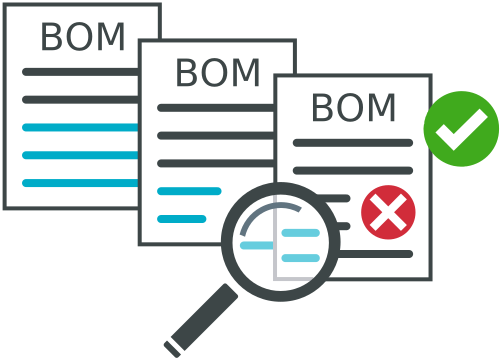
Read our best practices articles for tips on effective and efficient bill of materials (BOM) management.
BOM reconciliation is particularly vital when many stakeholders (engineering, manufacturing, sourcing, and suppliers) own slightly different versions of the BOM. In the absence of a reconciliation stage, discrepancies may result in manufacturing problems, erroneous purchase orders, delays, scrap, or incorrect builds.
A reconciled bill of materials (BOM) is occasionally regarded as the definitive “source of truth” BOM for initiating manufacturing once all stakeholders agree on the final iteration.
BOM reconciliation occupies the nexus of design and manufacturing preparedness. Prior to transitioning from prototype or design to full production, reconciliation guarantees:
BOM reconciliation is a component of the release gate in new product introduction (NPI). It helps mitigate errors and miscommunication throughout the transition from design to execution.
BOMs are fundamental components in product lifecycle management (PLM) and frequently integrated with quality management systems (QMS); hence, BOM reconciliation should be incorporated into these systems. A PLM environment preserves multiple BOM views (engineering, manufacturing, and service), and reconciliation ensures their alignment. A QMS component guarantees that reconciliations and modifications are performed through controlled, auditable procedures, particularly in regulated sectors.
Change management (ECO) is intricately linked; when differences are identified, an ECO may be initiated to revise one or more BOMs. The reconciliation process ensures that no unauthorized variations enter the production process. Likewise, supply chain systems rely on a reconciled Bill of Materials for precise procurement, costing, sourcing, and inventory planning.
Consequently, BOM reconciliation serves as a conduit among design (PLM), quality assurance (QMS), and implementation (ERP/supply chain). It guarantees the consistency of the “digital thread” of product data across systems and stages.
BOM comparison involves identifying discrepancies between two BOMs or versions of a BOM, such as alterations in parts or quantities. Reconciliation extends beyond merely identifying discrepancies; it facilitates decision-making to address these issues, fosters consensus, and integrates data into a comprehensive bill of materials (BOM).
BOM reconciliation must occur prior to manufacturing release, typically as part of a release gate in NPI, once all design modifications have been integrated and before procurement or production commences. It may also occur intermittently as distinct BOM versions diverge over time.
Modern PLM systems offer BOM alignment, reconciliation, and/or comparison capabilities. Certain platforms offer rule-based verifications, automated difference reports, and automated notifications for unauthorized components. Integration with ERP and supplier systems facilitates automated synchronization.
Common challenges encompass part number discrepancies (e.g., synonyms, duplicates), reference designator inconsistencies, unapproved components, absent or surplus items, amount rounding inaccuracies, incompatible units of measure, and insufficient reconciliation audit trails or decision transparency.