Integrated PLM and QMS helps companies address quality throughout product development rather than treating it only as a manufacturing concern. Engineering teams can consider quality findings, supplier issues, prior nonconformances, and corrective actions when designing or modifying products.
This approach is particularly useful during new product introduction (NPI). As a product moves from design through prototypes, pilot builds, validation, and production, requirements and product configurations may change quickly. Connecting quality processes with controlled product records helps teams identify issues earlier and maintain traceability as the design develops.
Integrated PLM and QMS create a direct connection between quality events and product changes. For example, a supplier quality issue could result in a corrective and preventive action (CAPA), which could then lead to an engineering change, an updated specification, or a new approved component.
Linking these records and processes gives teams context for each change. Reviewers can understand why the change was requested, which products are affected, what quality information supports the decision, and whether additional validation is required before release.
Integrated PLM and QMS support bill of materials (BOM) management by linking product structures to the quality information that affects them. If a component has a nonconformance, supplier corrective action, or other quality issue, teams can identify the assemblies and products that contain the affected item. This relationship supports impact analysis and helps prevent outdated or unapproved components from entering production.
The same connection benefits new product introduction and supply chain management. Engineering, quality, manufacturing, and suppliers can work from controlled product specifications while tracking quality requirements and changes. When a supplier, component, or design changes, connected workflows can help ensure the change is reviewed, approved, documented, and communicated before production continues.
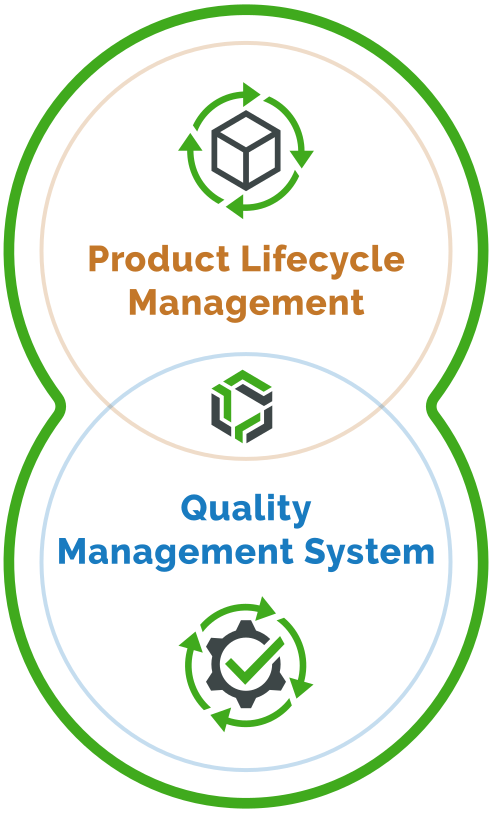
Product lifecycle management (PLM) controls product information and processes, including BOMs, revisions, specifications, documentation, and engineering changes. A quality management system (QMS) manages quality processes such as CAPAs, nonconformances, audits, complaints, training, and supplier quality.
Integrating PLM and QMS connects quality records directly to the products, parts, documents, suppliers, and changes they affect. This improves traceability and helps engineering and quality teams coordinate decisions without relying on disconnected records or manual information transfers.
Integrated PLM and QMS can maintain controlled records of product revisions, approvals, quality events, corrective actions, and related documentation. These connections make it easier to demonstrate how product and quality processes were followed during audits and regulatory reviews.
Integrated PLM and QMS allows engineering and quality processes to remain connected as a product moves from development into production. Teams can manage BOM revisions, engineering changes, quality requirements, supplier issues, and approvals while maintaining a traceable product record.

Arena PLM software streamlines product development so you can deliver products under budget and ahead of schedule.
Arena QMS helps you ensure regulatory compliance and faster delivery of life-enhancing products to your customers.