Electronic records are the digital versions of documents and quality records found throughout product development and manufacturing. Some examples are:
For electronic records, the audit trail creates documented evidence that controlled information has been properly updated, reviewed, and maintained. This gives teams the visibility they need to support decisions, resolve issues faster, and demonstrate compliance with greater confidence.
Modern cloud-based product lifecycle management (PLM) and quality management system (QMS) solutions automatically create audit trails for product development and quality activities.
By linking product information, quality records, workflows, approvals, and electronic signatures in one system, manufacturers can:
Companies in regulated industries such as medical devices, life sciences, and aerospace and defense manufacturing benefit from integrated PLM and QMS software that provides a centralized audit history to support compliance and improve operational efficiency.
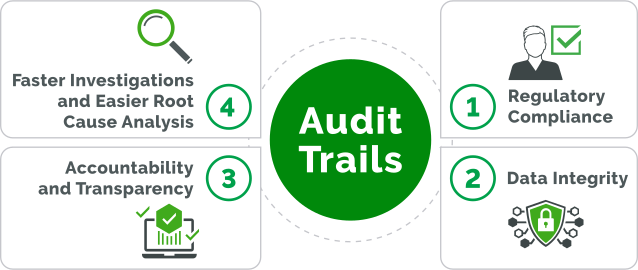
Audit trails help organizations to:
An audit trail is necessary to show that electronic records are accurate, complete, and trustworthy.
Manufacturers regulated by the U.S. Food and Drug Administration (FDA) must have audit trails. They are a key part of 21 CFR Part 11, which sets out the conditions for accepting electronic records and electronic signatures.
Systems that are compliant with FDA 21 CFR Part 11 need to:
These requirements help ensure that electronic records can be relied upon during FDA inspections and regulatory reviews.
Manufacturers working to ISO 13485, the international quality management standard for medical devices, need to maintain documented evidence that product and quality activities are under proper control.
ISO 13485 does not specifically mention “audit trail,” but emphasizes:
An electronic audit trail helps companies meet these expectations by maintaining a complete history of all changes to controlled documents, quality events, training records, and design information.
An audit trail provides a complete history of activities performed within an electronic system. It records who made the change, what was changed, when the change occurred, and, often, why it was made. This helps organizations improve traceability, support investigations, and demonstrate compliance during audits.
Audit trails enhance electronic records by creating a permanent, tamper-proof history of all authorized changes. They preserve previous versions of information and provide documented evidence that records have been properly created, reviewed, approved, and modified throughout their lifecycle.
Organizations should maintain audit trails for controlled electronic records, including engineering documents, bills of materials (BOMs), change orders, quality records, CAPAs, nonconformance reports, training records, specifications, design history files (DHFs), and other compliance-related documentation.
Modern Cloud PLM and QMS platforms automatically generate audit trails as users create, modify, review, and approve records. By capturing this information in a centralized system, manufacturers can improve traceability, reduce manual recordkeeping, simplify audit preparation, and support compliance with regulations such as 21 CFR Part 11 and quality standards such as ISO 13485.