
Moving Beyond Oracle Agile PLM: Lessons Learned From Solution Architect Liran Vaintrov
Inside This Article
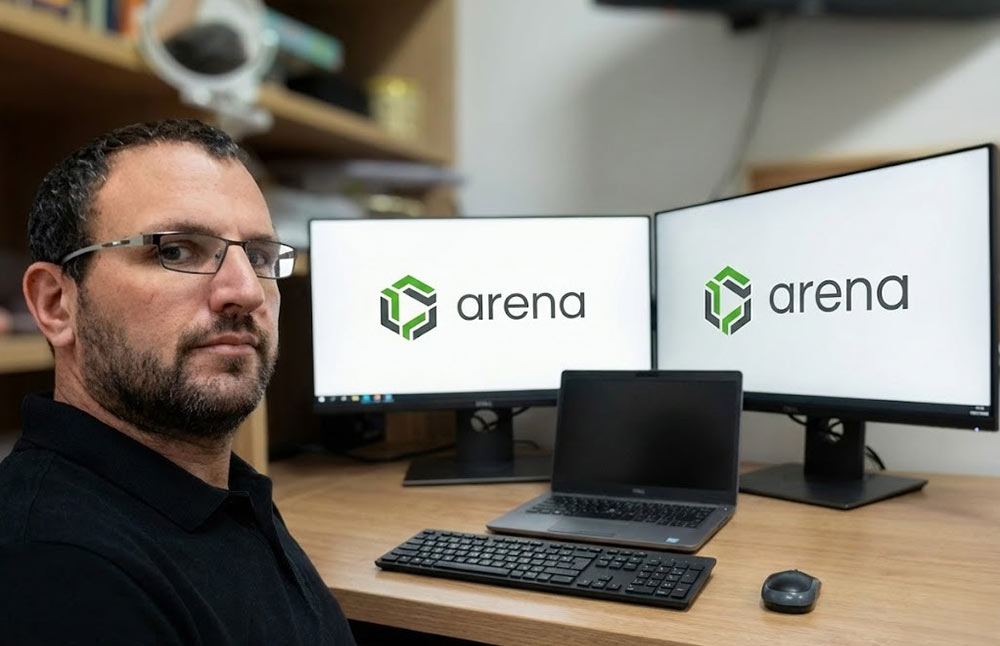
In this Arena expert spotlight, we sat down with Solution Architect Liran Vaintrov to discuss his career path from engineering to IT and his hands-on experience implementing product lifecycle management (PLM) solutions. Liran offers insights on making the move from legacy systems like Oracle Agile to Cloud PLM and shares practical advice for ensuring a smooth migration.
Liran, can you tell us about your professional background and journey to PTC?
Liran: I started my career as a component engineer and change analyst. That gave me a strong foundation in understanding how engineering change processes impact manufacturing, supply chain, and compliance. About a decade ago, I transitioned from engineering to IT and began working with PLM systems to help organizations connect people, data, and processes.
I’ve worked with several PLM platforms, mostly Oracle Agile PLM. Agile was a robust system; however, it presented challenges with upgrades, flexibility, and enterprise integrations. I found that moving to Cloud PLM eliminated many of these barriers and accelerated time to value.
My exposure to Arena PLM began when I implemented it at Kornit Digital, working alongside Arena Solution Architect Dave Barry. That experience allowed me to see Arena not just as a PLM solution, but as a cloud-native platform for modern, scalable product development. Now, as a Solution Architect at Arena by PTC, I leverage my experience to help customers quickly adopt PLM and achieve their desired results.
You mentioned working extensively with Oracle Agile PLM. How did you handle system customization and process extensions (PXs)?
Liran: At my previous company, SolarEdge Technologies, we relied heavily on PXs and event-based actions to make the system more robust and supportive of business needs. We implemented extended automations and custom actions through coding, which allowed us to support complex business processes that the PLM solution itself didn’t provide out of the box. While the coding was a one-time effort, maintaining those customizations required ongoing configuration and parameter management, along with code updates to support new PLM system upgrades or patches.
Describe your onboarding experience when transitioning from Oracle to Arena at Kornit Digital.
Liran: We approached onboarding as a value-driven program. We defined a minimum viable product (MVP) focused on item and document management, engineering change order (ECO) workflows, and new product introduction (NPI) processes. Early in the transition, we focused on data readiness and cleansing—item structure, naming conventions, and versions. We assembled cross-functional teams from R&D, quality, operations, procurement, and IT to enable fast decision-making. Our user training was hands-on, incorporating real process cycles instead of theoretical demos.
The result was rapid user adoption, fewer spreadsheets and email-driven changes, and streamlined product development processes.
What does a typical day look like for you as a Solution Architect at Arena by PTC?
Liran: While I continue to learn by shadowing Dave Barry and other solution architects, I’ve started to lead some projects independently, gaining hands-on experience. My work involves data migration, system configuration, and validation for customers. I’m also helping customers plan integrations with CAD, PDM, ERP, and other enterprise systems, as well as supporting training and key performance indicator (KPI) adoption.
For me, a successful day means delivering a real-world PLM/QMS use case that goes live and meets the customer’s needs. If the customer is happy and finds the system capable of supporting their business processes, we’ve achieved our goal.
Do you focus on specific industries, or is your work broader?
Liran: It’s across the board. Currently, I’m collaborating with a medical device manufacturer, but I’ve also supported high-tech companies. Each industry brings its own unique requirements, especially regarding regulatory compliance and validation.
Arena’s flexible workflows and business processes are well-suited to meet the diverse needs of different industries. For instance, our software validation package is designed to help medical device companies speed FDA 21 CFR Part 820 and 11 compliance.
What common challenges do these companies face in product development before adopting Cloud PLM?
Liran: The challenges are surprisingly consistent. Product information is often scattered across tools and teams, with no central source of truth. Change controls are manual due to reliance on spreadsheets and emails, which leads to slow cycles and errors. Additionally, companies experience a lack of traceability, compliance gaps, limited KPI visibility, and poor supplier collaboration. These issues result in time-to-market delays.
What key factors should companies keep in mind when considering Cloud PLM?
Liran: When evaluating different Cloud PLM solutions, companies should prioritize the following:
- Ability to simplify regulatory compliance—think ISO, FDA, EU MDR, AS9100, ITAR/EAR, RoHS, REACH, DPP, and other key standards.
- SaaS architecture that offers maximum scalability, robust security measures, and automatic software updates.
- Low- or no-code system configuration for effective data migration strategies, integration readiness with CAD and ERP systems, and greater agility.
Robust change management, fast time to value, and a vendor partnership encompassing PLM best practices and ongoing support are also essential.
For companies currently on Oracle Agile, do they lose any flexibility or PLM functionality when transitioning to a Cloud PLM system like Arena?
Liran: Not at all. While some medium- and large-size companies use process extensions extensively in Agile, many don’t fully utilize them. With Arena, we focus on investigating current processes and helping customers configure the system using the admin user tool. If customers require additional customization, Arena’s RESTful API is a powerful resource. For example, at Kornit, we wrote code using the API to support business processes not covered by standard features. Arena’s flexibility and integration capabilities ensure that customers don’t lose functionality—they gain agility and scalability.
What advice would you offer to customers to streamline their Arena onboarding experience?
Liran: I would offer these seven tips to ensure a seamless PLM onboarding experience:
- Define clear, measurable business goals from the start. What outcomes do you expect to achieve with PLM?
- Establish a core onboarding team consisting of IT, engineering, R&D, quality, operations, and procurement. Ideally, IT should lead the implementation.
- Begin data cleansing early, focusing on naming conventions, BOM structures, and versions.
- Migrate all data into Arena for a single source of product truth.
- Run tests in the system. Once the PLM core is stable, add analytics and automation.
- Engage all stakeholders in PLM training from the early stages to drive faster adoption.
- Track KPIs like ECO cycle time and supplier engagement.
Which Arena PLM features contribute most to fast deployment and adoption?
Liran: Arena is a true SaaS solution, requiring no manual installations or upgrades. It offers flexible import/export options for data extraction, pre-built workflows and templates for ECO, NPI, and quality processes, plus advanced supplier collaboration tools, API connectors, and out-of-the-box analytics dashboards. These capabilities make deployment faster and adoption smoother.
Are there any manufacturing trends or innovations that excite you right now?
Liran: Two things stand out. First, Arena has AI-enabled features like conversational agents, file comparisons, and document summaries to help product teams work faster and smarter while maintaining strict data security. No customer data training, no cross-customer data sharing. Second, the sunsetting of Oracle Agile PLM in 2027 is a huge shift for the market. There’s a lot of attention on Arena as the proven replacement for Agile, and it’s exciting to be part of that transformation.
What activities do you enjoy outside of work?
Liran: I love spending time with my family. I have five kids, including two sets of twins! My weekends are devoted to family activities—getting out in nature, watching movies, or just being together. My family keeps me busy, and I cherish that time.
Thank you, Liran, for sharing your insights. Your experience highlights the importance of collaboration, flexibility, and scalability in today’s PLM landscape.
Interested in learning more about Arena’s approach to customer onboarding and training? Visit our customer experience web page.
 Shelly St.Hill